Are you ready to advance your plumbing career with the most sought-after certification in residential inspection? Here’s everything you need to know about becoming an ICC P1 Certified Residential Plumbing Inspector.
What is the ICC P1 Residential Plumbing Inspector Certification?
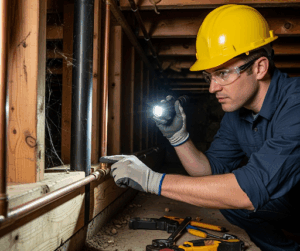 The ICC P1 Residential Plumbing Inspector Certification is your gateway to higher-paying inspection jobs and professional credibility. Issued by the International Code Council (ICC), this nationally recognized credential proves you can inspect plumbing systems in one- and two-family homes to ensure they meet modern safety and building codes.
Whether you’re a seasoned plumber looking to transition into inspection work or a building professional expanding your expertise, the P1 certification opens doors to lucrative opportunities in both private and municipal sectors.
Why P1 Certification Matters in Today’s Market
- Job Security: Municipal inspection positions often require ICC certification
- Income Boost: Certified inspectors earn 20-40% more than non-certified professionals
- Career Flexibility: Work for cities, counties, or start your own inspection business
- Professional Recognition: Join the ranks of elite building safety professionals
Enroll in the ICC P1 Residential Plumbing Inspector Exam Prep Course
What Does a P1 Residential Plumbing Inspector Actually Do?
As a certified P1 inspector, you’ll be the guardian of residential plumbing safety. Your inspections cover critical systems that protect families and communities:
Water Supply Systems
- Service lines and distribution piping
- Pressure regulation and flow rates
- Cross-connection control and backflow prevention
Drainage and Waste Systems
- Drain, waste, and vent (DWV) networks
- Proper trap installation and maintenance
- Sewer connections and grading
Fixtures and Equipment
- Water heaters and safety devices
- Plumbing fixtures and faucets
- Cleanouts and accessibility requirements
Your expertise ensures these systems work reliably for decades while protecting public health and safety.
ICC P1 Exam Format: What to Expect on Test Day
Exam Specifications
- Questions: 60 multiple-choice questions
- Time Limit: 2 hours
- Passing Score: 75% (45 correct answers)
- Format: Open book (IRC codebook allowed)
- Code Edition: Based on 2021 or 2024 International Residential Code (check your jurisdiction)
P1 Exam Content Breakdown
| Topic Area | Percentage | Question Count |
|---|---|---|
| Sanitary Drainage | 23% | 14 questions |
| Vents | 22% | 13 questions |
| Water Supply & Distribution | 22% | 13 questions |
| General Requirements | 13% | 8 questions |
| Water Heaters | 12% | 7 questions |
| Fixtures | 8% | 5 questions |
Pro Tip: The heaviest emphasis is on drainage, venting, and water supply systems—make these your study priorities.
The #1 Challenge Most ICC P1 Residential Plumbing Inspector Candidates Face
Here’s what catches most test-takers off guard: The P1 exam tests your ability to find and apply code sections quickly, not your field experience.
Many experienced plumbers fail because they rely on “how things are done” rather than “what the code actually says.” The exam requires precision in code interpretation and fast navigation skills.
Proven P1 Exam Preparation Strategy
Phase 1: Master Your Codebook (Weeks 1-2)
- Organize with tabs: Mark major sections for instant access
- Learn the index: Practice finding topics using both the index and table of contents
- Time yourself: Aim to find any section within 30 seconds
Phase 2: Study Core Topics (Weeks 3-4)
Focus your study time on high-value areas:
- Drainage systems (23% of exam)
- Venting requirements (22% of exam)
- Water supply protection (22% of exam)
Phase 3: Practice Under Pressure (Weeks 5-6)
- Take full-length timed practice exams
- Identify weak areas and review immediately
- Practice code lookup speed drills
- Don’t schedule your exam until you’re consistently scoring 80%+
Common P1 Exam Mistakes to Avoid
❌ Relying on field experience alone – The code is specific, and field practices vary
❌ Poor time management – Practice finding code sections quickly
❌ Skipping practice exams – You need to experience the time pressure beforehand
❌ Inadequate code organization – Tabs and bookmarks are essential
❌ Taking the exam too early – Wait until practice scores consistently hit 80%
What Happens After You Pass the ICC P1 Residential Plumbing Inspector Exam?
Immediate Benefits
- Certificate valid nationwide (specific jurisdictions may have additional requirements)
- Eligibility for municipal inspection positions
- Professional credibility with contractors and clients
- Foundation for additional ICC certifications
Career Advancement Opportunities
- Municipal Building Inspector: $50,000-$85,000 annually
- Private Inspection Services: $40-$100 per inspection
- Consulting Work: $75-$150 per hour
- Training and Education: Teach others what you’ve learned
Ready to Start Your P1 Journey? Here’s Your Next Step
Success on the P1 exam isn’t about luck—it’s about preparation. Our ICC P1 Residential Plumbing Inspector Exam Prep Course has helped hundreds of professionals pass on their first attempt.
What’s Included:
✅ Timed practice exams that mirror the real test experience
✅ Code navigation training to build speed and accuracy
✅ Real-world scenarios you’ll encounter as an inspector
✅ Expert support from certified instructors
Questions about the P1 exam or our prep course? Contact our team of certified instructors who’ve helped over 20,000 professionals advance their careers.
Enroll in the ICC P1 Residential Plumbing Inspector Exam Prep Course